

Asserting Dominance Professionally

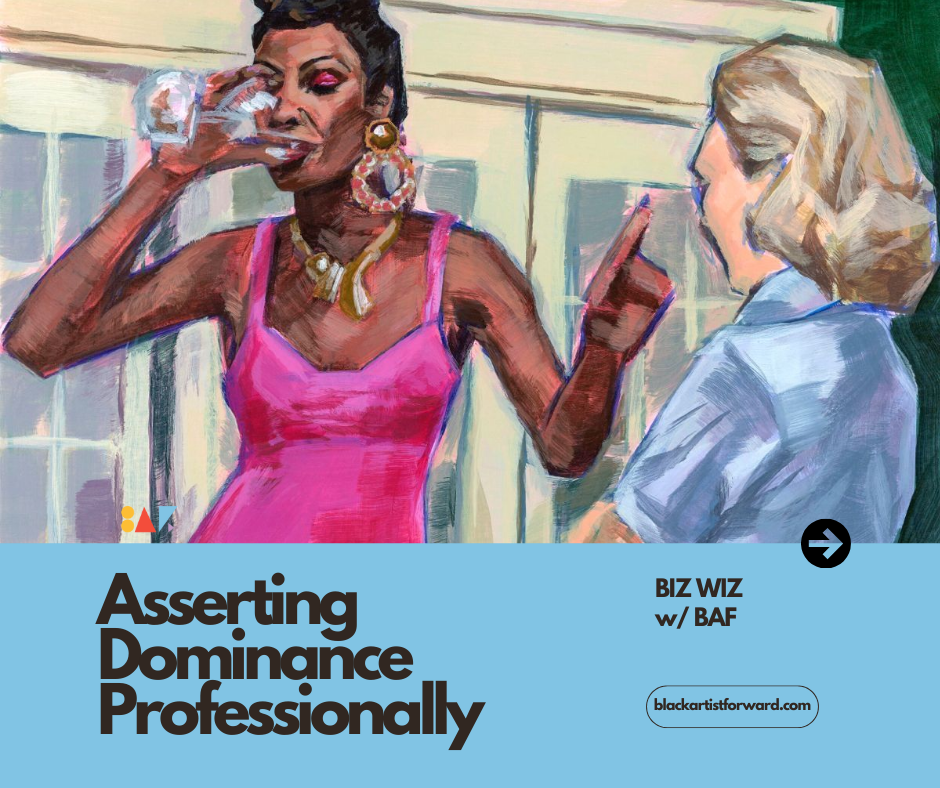
How to handle combative clients without losing yourself or your livelihood
When I was first starting out, trying to sell my art and my designs, I found myself often taking on clients that drained me. One was texting and calling at midnight. One would disappear for ages and then get mad at me for not reminding them. I had clients that I had to chase for months for $40, spending my time begging like Oliver Twist for crumbs. Sitting in another meeting, being berated because I wasn't available at midnight to make edits, but they could see I was online on Facebook, I had to put my foot down. Not all money is good money. Artists are often taught, implicitly and explicitly, to be grateful for opportunity. That mindset quietly trains creatives to shrink, defer, and over-serve in rooms where they actually hold leverage. Leverage I didn't know I had, and I'm going to clue you in now, so you don't have to learn it the hard way.
Asserting dominance professionally is about reclaiming your leverage.
You are not a favor-seeker. You are a specialist. The client is not doing you a kindness by hiring you. They are solving a problem they cannot solve themselves.
That is power. The mistake is giving it away.
---
Being agreeable isn’t the same as being effective
Being a pushover does not make clients happier. It teaches them how to treat you. How you carry yourself and conduct yourself when dealing with clients shapes what they expect from you. Being timid isn't cute in business; it's a loophole for opportunists to jump through. Big facts: they're not treating artists they perceive as professional the way they are treating you. In fact, they've sought you out to save coin and get the highest quality art for the least amount of money. While you're trying to be flexible and affable, they're seeing it as easily manipulated. Not all clients, but some, and we don't have time for any.
When a professional artist has art in a gallery space, there is a shift in expectations. The walls, lighting, and hours exist so the work can be respected. Galleries create boundaries and expectations for clients to uphold. Boundaries are not barriers. They are curation. Whether your art is in a gallery or not, it deserves to be protected with proper boundaries.
When you over‑accommodate, you signal uncertainty. Clear expectations build confidence, and confidence attracts better clients.
Practice:
Price lists, scopes, and timelines must always be IN WRITING.
Revisions are defined, and in writing, not implied.
Decisions have checkpoints, not endless open doors.
---
Redirecting a conversation that’s gone sideways
When a client becomes combative, emotional, or circular, the goal is not to win. The goal is to re‑anchor the conversation to facts, agreements, and outcomes. Getting emotional, loud, or aggressive will just land you on TikTok, and we're not falling in that trap in 2026.
The Pivot Language Toolkit
Use calm, neutral phrases that move the exchange out of heat and back into structure.
“Let’s pause, and let's go back to review what we agreed on.”
“I want to be sure I’m responding accurately. Can you clarify what outcome you’re looking for?”
“This feels like it’s drifting from the brief. I’m happy to discuss changes as a new phase.”
“I’m hearing frustration. Let's take a beat and talk about what solutions are available based on what we agreed on.”
"Let me pull up our contract really quickly, and we can go over it together to make sure we're both on the same page."
"While I'm willing to give you space to express your frustration, let me clarify what I can and will not be able to do based on our agreement."
You are not arguing; this is not an argument. You are directing. As the professional, you direct the flow of these conversations. You're not here to be taken on an emotional ride; you're here to clarify and define the already stated boundaries. Message: If you don't have this in writing, you're going to have a hard time keeping an upper hand.
Rule of thumb:
If a conversation repeats itself twice without progress, it needs a summary email. Verbal loops end. Paper trails begin.
On that note let's talk about:
Knowing when to pause instead of pushing
Not every tense moment needs to be resolved in real time. When emotions rise, clarity drops. Power is not proven by staying in the fire. It’s proven by knowing when to step out of it. Let me also be clear, I don't care what they say or call you, do not let them take you out of your professional character. If they are being aggressive, verbally abusive, or threatening, immediately walk away and bring in security or the police to remove them. Yelling back and puffing up your chest will only be used against you. Use this rule of thumb: if you don't call the police, they probably will. Also, a mug shot is never cute. You have the leverage, use it.
Professional dominance includes the right to pause.
If a conversation starts to feel heated, circular, or performative, shifting from verbal to written communication protects everyone involved.
Why this matters, especially for artists:
Phone and in-person conversations reward volume and speed, not accuracy
Power dynamics can escalate quickly when tone is misread
Written communication slows things down and recenters facts
Documentation becomes built-in instead of retroactive
Language you can use in the moment:
“This conversation has surfaced a few things I need to think through. I want to be sure I respond clearly, so I’ll follow up by email to avoid confusion.”
“I don’t want this to turn negative for either of us. Let’s pause here, and I’ll send an email outlining next steps and options.”
“I think we’re talking past each other right now. I’m going to regroup and follow up in writing so we can move forward constructively.”
No defensiveness. No accusations. Just composure.
Stepping away is not avoidance. It’s temperature control.
---
Calling it quits without burning the bridge or yourself
I said it before, let me say it again: All money is not good money. Some clients cost more than they pay.
Professional dominance looks like:
Ending relationships before resentment sets in
Protecting your reputation by staying composed
Choosing sustainability over short‑term cash
Exit language that keeps you clean:
“I don’t think I’m the best fit for what you’re looking for.”
“To maintain the quality of my work, I’m unable to continue this project under these conditions.”
“I’m going to step away so you can find a provider better aligned with your needs.”
No justifying. No over‑explaining. Calm, direct, final.
Walking away is not failure. It's self care.
---
CYA is not paranoia. It’s professionalism.
Covering yourself is not about expecting conflict. It’s about being prepared for it.
Non‑negotiables:
Contracts with scope, payment terms, copyright terms, and termination clauses
Written summaries after tense conversations
Versioned files and approval checkpoints
Invoices that match the agreement, not the emotion of the moment
Golden rule: If it’s not documented, it didn’t happen.
Understand, as much as we think of the good of others, people lie. Let me say it again, people lie. Especially if it can save them money. So, put it IN WRITING. I don't care if it's your grandmother, put it in writing.
---
Power Reclaiming Exercise: Before the Client Call
This is a short grounding exercise artists can use before meetings, negotiations, or difficult conversations. It is not about hype. It is about remembering your position.
Step 1: Embody your position:
Write one sentence: “I have the expertise they need.”
What do you bring to the table? Be specific. Style, strategy, vision, cultural fluency, execution. Name what cannot be Googled.
Step 2: Define the problem you solve
Complete this sentence: “Without my work, the client would struggle with ___.”
This recenters you as a solution, not a supplement.
Step 3: Set your internal floor
Answer privately: “What behavior, scope creep, or tone ends now?”
Every client brings new lessons, take the last lesson you learned and name it here. You don’t need to announce it. You just need to know it.
Step 4: Choose your stance
Before the call, decide which role you are playing:
Expert
Translator
Strategist
Executor
Never “pleaser.” That is not a role. That is a reaction. Moreover, it's a reduction. A reduction of your value.
Step 5: Slow your tempo
Speak slightly slower than feels natural. Pause before answering. Silence is not submission. It is gravity.
You are entering the room with your tools already sharpened. You are not asking to be useful. You already are.
Final note for artists
You can be kind and firm. You can be expressive and structured. Professional dominance is quiet. It does not posture. It simply stands.
When you stop trying to be liked and start focusing on being clear, your business grows stronger, your clients get better, and your work stays yours.


Comments